
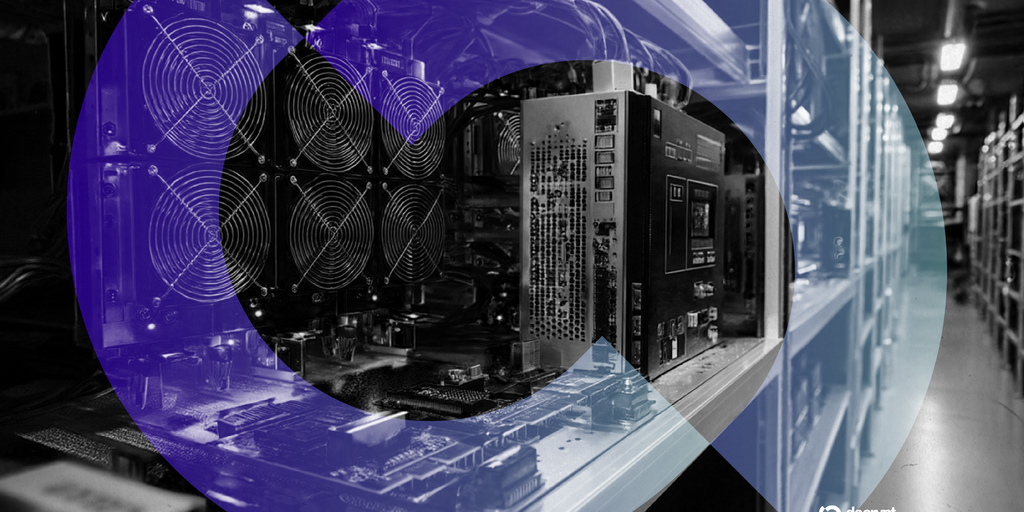

Postquant Labs has unveiled what it describes as the first publicly available quantum-classical blockchain testnet, called Quip Network. The platform allows participants to mine cryptocurrency using quantum computers alongside conventional CPUs and GPUs. Rather than competing to solve the hash-based calculations central to Bitcoin mining, participants on Quip Network compete to solve optimization problems. The testnet went live on Thursday, April 2, 2026.
The company, founded in 2024, partnered with D-Wave Systems, based in Burnaby, Canada, to run portions of Quip Network’s proof-of-work process on D-Wave’s quantum annealing processors. Specifically, miners are asked to solve an Ising model optimization problem — a mathematical framework in which a problem is mapped to an energy function, and the solution corresponds to finding the lowest-energy arrangement of a system of interacting binary variables. Richard Carback, CTO and co-founder of Postquant Labs, explained that this type of problem is significantly harder for classical computers to solve but well-suited to quantum systems. He described it as searching for a particular Ising model that matches a specific energy target.
Successful miners earn QUIP tokens, which are intended to be used to rent time on quantum computers connected to the network. Colton Dillion, CEO and co-founder of Postquant Labs, compared the model to Bittensor‘s TAO network, which rewards users for contributing AI models and computing resources. Dillion said the QUIP token would ultimately function as payment for access to quantum computing time on the network.
Postquant also claims the model could significantly reduce the energy consumption associated with mining. Bitcoin mining has drawn scrutiny for its heavy electricity use, as it depends on large numbers of machines running continuous computations. Dillion estimated that mining a single block on a quantum computer would require approximately 13 watts — roughly equivalent to the energy a light bulb uses in an hour.
Despite these potential advantages, quantum hardware remains far less accessible than conventional mining equipment. Traditional GPUs are widely available for gaming and crypto mining, while quantum computing systems are largely confined to corporate research labs and universities. Trevor Lanting, chief development officer at D-Wave Systems, said his company views quantum processors as accelerators for specific workloads rather than wholesale replacements for classical hardware. He noted that D-Wave already has customers using its Leap platform to solve operations and logistics problems commercially.
Lanting also tempered expectations about the pace of change in the industry, saying he does not foresee a sudden shift and that different technologies are commercializing at different rates. His comments came amid broader industry discussion about long-term security risks posed by advances in quantum computing. Researchers have increasingly raised concerns about a scenario known as Q-Day — the point at which a quantum computer becomes powerful enough to break the public-key cryptography that secures much of the internet, including systems that rely on elliptic curve cryptography such as Bitcoin and Ethereum.
Postquant said it plans to use a future version of the network to benchmark progress toward breaking elliptic curve cryptography, the mathematical system that underpins Bitcoin wallet security. Carback advised current Bitcoin users to continue mining but recommended adopting post-quantum wallets in the meantime. The company said it will provide updates on developments in that area as the network evolves.
Originally reported by Decrypt.